
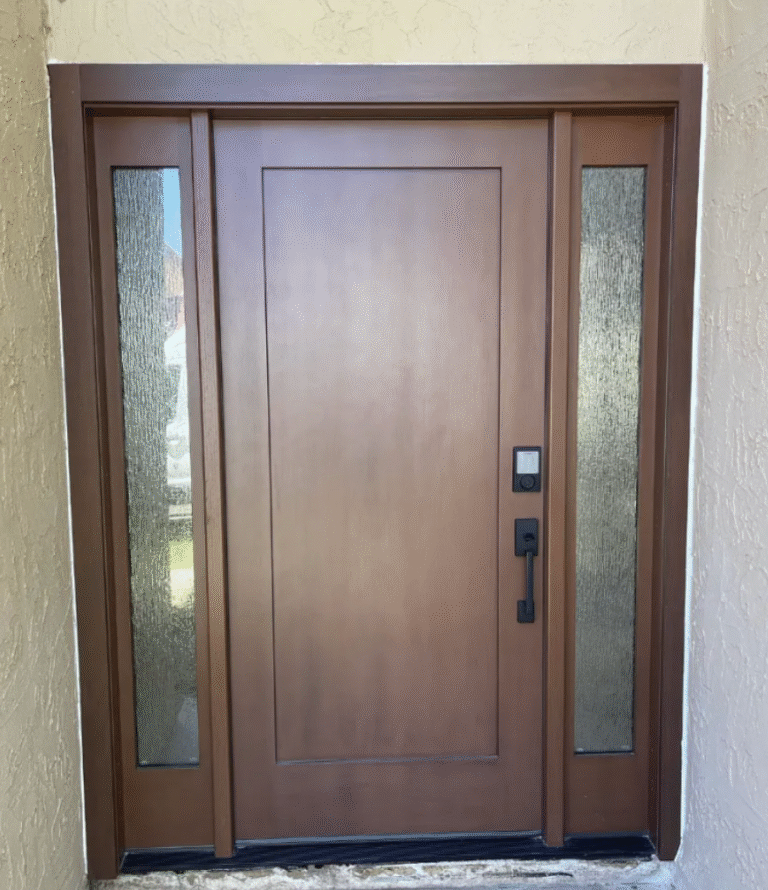
In the Sunshine State, a front door is more than just a grand entrance — it is a critical line of defense against the elements. Choosing hurricane rated front doors is an essential investment for any homeowner, as these systems are specifically engineered to maintain the structural integrity of your home during severe weather. Navigating the residential exterior door code requirements in Florida can be complex, but understanding the Florida Building Code (FBC) is the first step toward ensuring your property and family remain protected.
Residential Exterior Door Code Requirements in Florida
The Florida Building Code sets some of the most stringent standards in the world to mitigate storm damage. The primary goal is to prevent a “breach” in the building envelope. If a door fails, the sudden change in internal pressure can literally blow a roof off from the inside.
Under the FBC, doors in Wind-Borne Debris Regions (WBDR) — areas where wind speeds can exceed 140 mph — must be impact-resistant or protected by an approved shutter system. These requirements are even stricter in High-Velocity Hurricane Zones (HVHZ), such as Miami-Dade and Broward Counties, where specialized testing protocols are mandatory for every exterior opening.
Rigorous Testing: Beyond the Standard Swing
A door doesn’t earn its “hurricane-rated” title just by being heavy. To meet code, it must pass a series of brutal laboratory tests:
- Large Missile Impact Test: A 9-pound 2×4 lumber stud is fired from a cannon at the door at 50 feet per second. The door must remain in its frame without being penetrated.
- Cyclic Pressure Testing: After the impact, the door is subjected to 9,000 cycles of positive and negative pressure, simulating the intense “push and pull” of hurricane-force gusts.
- Wind Load & Infiltration: Doors are tested for Design Pressure (DP) to ensure they won’t buckle under wind loads, as well as their ability to prevent water and air from seeping through seals during wind-driven rain.
Location Matters: Coastal vs. Inland
It’s important to clarify that requirements vary by location. A home sitting directly on the Atlantic coast faces much higher risks than one fifty miles inland. Code requirements fluctuate based on your proximity to the “mean high-water line” and your specific wind zone. Always consult your local building department to determine if your address requires Large Missile (ground level) or Small Missile (high-rise) protection.
Look for the Gold Standard: Certification Labels
When shopping for a new door, don’t take a salesperson’s word for it—look for the label. High-quality impact doors will feature a Miami-Dade Notice of Acceptance (NOA) or a Florida Product Approval (FPA) number. These certifications are the “gold standard,” proving the product has been independently verified to withstand Florida’s toughest storms. Contact 360 Impact today to learn more about hurricane-rated doors.